
ADAS Calibration After a Windshield Replacement: What Saskatchewan Drivers Need to Know
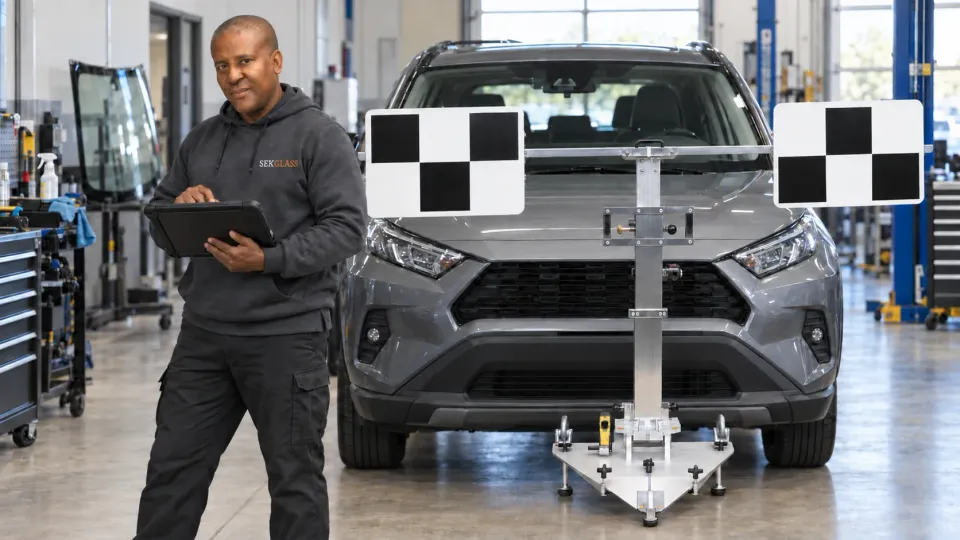
Replacing a windshield is no longer only a glass job. On many newer vehicles, the windshield is also the mounting surface and viewing path for a forward-facing camera used by advanced driver-assistance systems, often called ADAS. That camera can support features such as forward-collision warnings, automatic emergency braking, lane-departure warnings, lane-keeping assistance, adaptive cruise control, traffic-sign recognition, and high-beam assist, depending on the vehicle.
ADAS calibration is the process of checking and restoring the camera or sensor alignment after a windshield replacement when the vehicle manufacturer requires it. If the camera is not aimed and configured correctly, the system may not see road markings, vehicles, or hazards as intended. The right approach is based on the specific vehicle, the replacement performed, and the manufacturer’s procedure—not a one-size-fits-all promise.
For drivers in Kamsack, Canora, Pelly, Kelvington, and surrounding communities, the practical message is simple: when you need a windshield replaced, ask whether your vehicle needs ADAS calibration. Sek Glass can review the vehicle details, explain what the job involves, and help you plan the right next step.
What does ADAS calibration mean?
ADAS stands for advanced driver-assistance systems. These are electronic features designed to help a driver notice risks or assist with certain driving tasks. They do not replace an attentive driver, but they can add another layer of information and support on the road.
Many systems rely on a camera positioned near the rear-view mirror, looking through the windshield. Others use radar sensors, ultrasonic sensors, or cameras in other areas of the vehicle. The forward-facing windshield camera is especially important after glass replacement because even a small change in the camera’s position, angle, bracket, glass specification, or installation can affect what it sees.
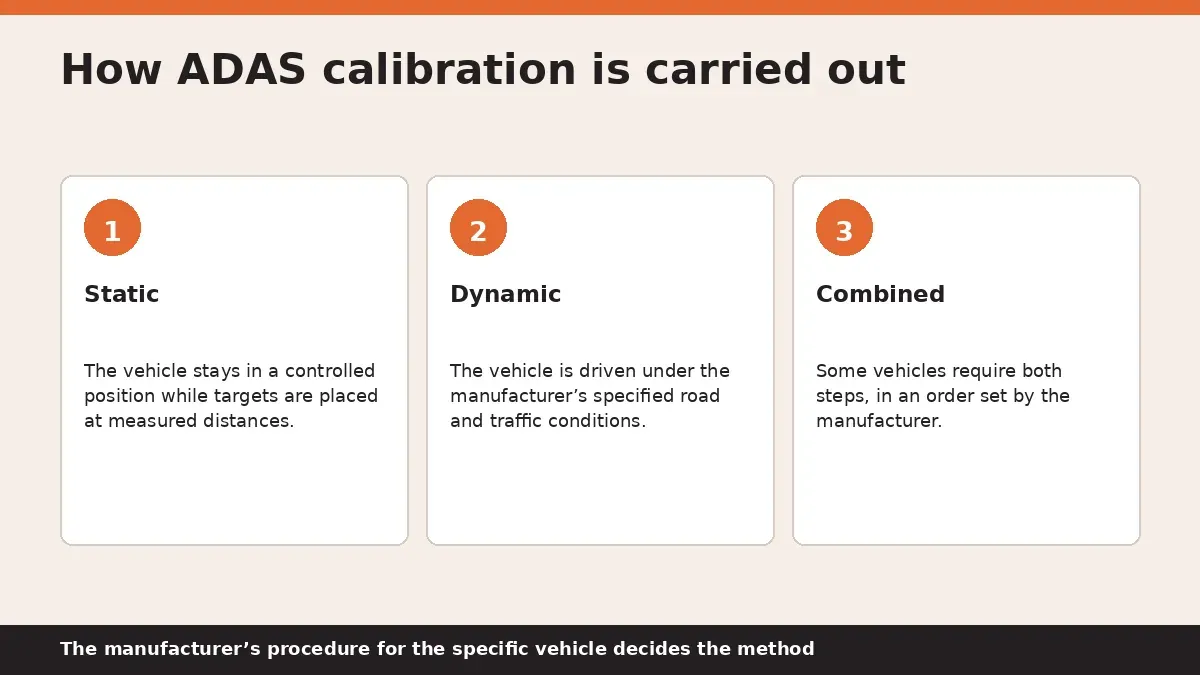
Calibration uses approved equipment and a vehicle-specific process to confirm that the system recognizes its reference points properly. Depending on the vehicle, this may mean:
- Static calibration: The vehicle stays in a controlled position while targets are placed at measured distances and heights.
- Dynamic calibration: The vehicle is driven under specified road and traffic conditions while the system completes its learning or verification routine.
- Combined calibration: Some vehicles require both static and dynamic steps.
The required method is set by the vehicle manufacturer. A calibration procedure for one make, model, trim, or model year may not apply to another. That is why the vehicle identification number, year, make, model, and installed driver-assistance features matter before the work starts.
Why windshield replacement can affect camera-based safety systems
A forward-facing camera is aimed through the windshield. Its view depends on more than whether the glass looks clear. It also depends on where the camera sits, how the mounting bracket is positioned, the windshield’s optical properties, and whether the vehicle has been returned to the reference position expected by its software.
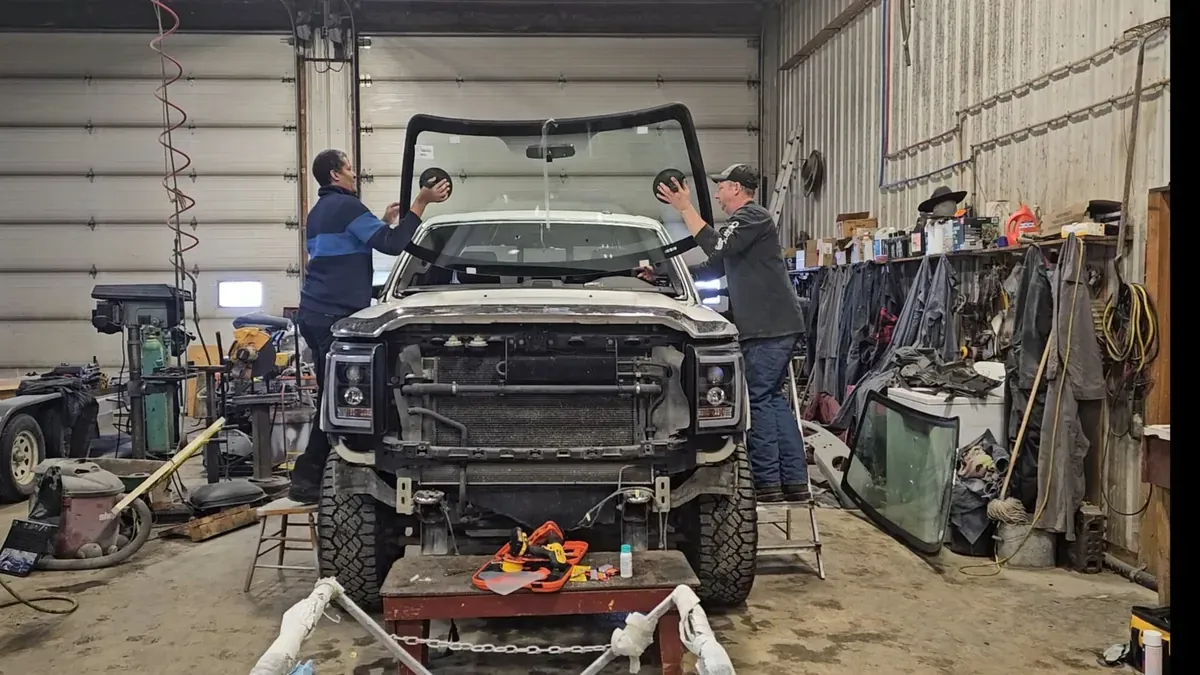
During a windshield replacement, the original glass is removed and new glass is installed. The camera may be detached and reattached, or its housing and related trim may be removed to complete the job. Even when the work is careful, the vehicle may require recalibration afterward. This is a normal part of the repair process for many vehicles, not evidence that something went wrong.
There are several reasons a manufacturer may require ADAS calibration after replacement:
- The camera’s physical position may change slightly when it is removed and reinstalled.
- The replacement windshield must be compatible with the vehicle’s camera and sensor system.
- Camera brackets, rain sensors, heating elements, acoustic layers, heads-up display areas, and other windshield features can vary by vehicle.
- The vehicle may store fault codes or require a calibration confirmation after related components are serviced.
- The camera needs to interpret what it sees correctly before driver-assistance features are relied upon.
A windshield can look perfectly installed while a camera still needs calibration. That is why visual inspection alone is not enough to decide whether the job is complete. The vehicle manufacturer’s service information is the right reference for the vehicle in front of us.
Which vehicles may need ADAS calibration?
There is no single list that covers every vehicle on the road. ADAS features are now common across cars, SUVs, pickups, vans, and some commercial vehicles, but the exact equipment varies by trim level and options package.
Your vehicle may need calibration after windshield replacement if it has a camera or sensor near the rear-view mirror area, or if it offers features such as:
- forward-collision alert or automatic emergency braking;
- lane-departure warning or lane-keeping assistance;
- adaptive cruise control;
- traffic-sign recognition;
- automatic high beams;
- driver-attention or road-edge warning systems;
- pedestrian, cyclist, or cross-traffic detection; or
- a head-up display or other windshield-integrated technology.
These features are useful clues, but they are not a substitute for checking the manufacturer’s procedure. Two vehicles that look almost identical can have different cameras, different windshields, and different calibration requirements. If you are booking a replacement, provide the year, make, model, trim if known, and VIN. A photo of the camera area near the mirror can also help identify the correct glass and process.
What happens if calibration is skipped?
Skipping a manufacturer-required calibration can leave a driver-assistance system unable to perform as intended. In some cases, the vehicle may display a warning message, an indicator light, or a notice that certain features are unavailable. In other cases, there may be no obvious warning that tells a driver the camera is not interpreting the road exactly as it should.
The risk is not limited to a system turning off. A camera that is out of calibration may identify lane markings, road edges, vehicles, or hazards at the wrong time or in the wrong place. That could affect the timing or reliability of alerts and driver-assistance functions. The driver remains responsible for driving safely at all times, but there is no reason to leave a required safety-system step unfinished after a windshield replacement.
There is also a practical ownership issue. If a warning light appears after the job, or a feature does not behave normally, diagnosing it later can be more complicated than confirming the correct procedure at the time of replacement. Completing the required calibration as part of the repair plan gives you a clearer record of what was done.
Static, dynamic, and combined calibration: what is the difference?
Static calibration is performed with the vehicle positioned on a suitable level surface. A technician uses the specified scan tool and precisely placed targets or patterns. The vehicle’s camera views those targets while the software carries out the manufacturer’s calibration routine. Small errors in target placement, floor level, tire condition, vehicle ride height, or lighting can affect the result, which is why the workspace and setup requirements matter.
Dynamic calibration is completed by driving the vehicle under conditions set by the manufacturer. The instructions may specify a speed range, a road type, visible lane markings, weather, traffic, distance, or a maximum time for the procedure. It is not simply a test drive. The vehicle is following a defined routine while its system verifies or learns the information it needs.
Combined calibration requires both methods. The order is important. A static routine may be required first, followed by a road procedure, or the manufacturer may state another sequence. Because these requirements differ by vehicle, a proper quote and scheduling conversation starts with the actual vehicle details rather than an assumption.
How to prepare for an ADAS calibration appointment
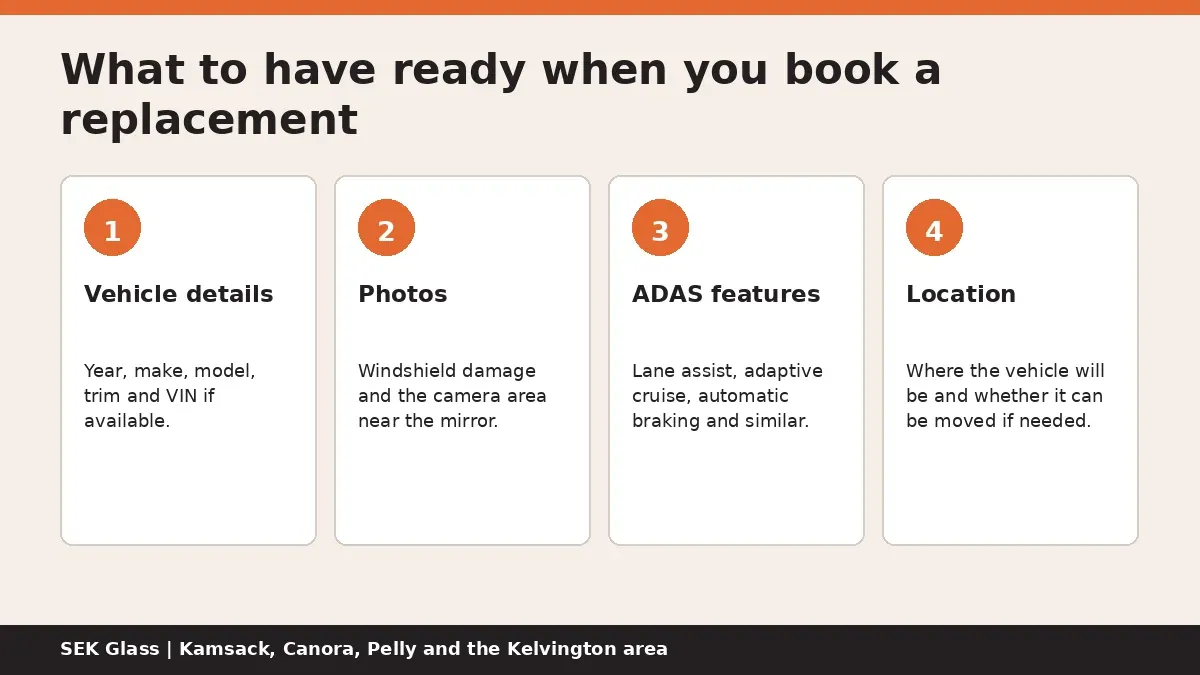
Good preparation helps avoid delays and makes it easier to confirm the correct calibration process. When you request a windshield replacement quote, provide as much accurate information as you can:
- Vehicle details: Year, make, model, body style, trim, and VIN if available.
- Photos: A clear photo of the windshield, the area around the rear-view mirror, and any warning messages on the dash.
- ADAS features: Let us know if you use lane assist, adaptive cruise, automatic emergency braking, or similar features.
- Damage details: Explain whether the windshield is cracked, chipped, leaking, or otherwise damaged.
- Service location: Share where the vehicle will be located and whether it can be brought to a suitable calibration location if required.
Mobile service can be a practical choice for many glass jobs. However, some calibration procedures require controlled space, level flooring, target placement, specific lighting, or a defined road drive. We will confirm what is appropriate for the vehicle and job. It is better to plan this up front than to assume every windshield replacement can be completed in exactly the same location.
Why the correct windshield matters
Not all windshields are interchangeable. A modern windshield may include mounting points for cameras and sensors, special shading, heating elements, acoustic layers, rain-sensor areas, antenna components, heads-up display compatibility, or other technology. The glass must match the vehicle’s required options and be installed using the appropriate procedure.
This does not mean every replacement needs the most expensive option. It means the correct part is identified for the specific vehicle. An accurate VIN and a close look at the existing windshield features help prevent an incorrect glass order and reduce the chance of delays.
If your vehicle has a forward-facing camera, do not treat the camera as an afterthought. Mention it when you first call. That allows the glass and calibration requirements to be reviewed together.
ADAS calibration and insurance
Insurance coverage for windshield replacement and calibration varies by policy, insurer, deductible, vehicle, and claim circumstances. Some policies may cover related calibration when it is required as part of a covered windshield replacement, while others may have different terms. The right answer comes from your own policy and insurance provider.
We can provide the job details you need for a discussion with your insurer, but we do not promise coverage before it is confirmed. If you plan to make a claim, contact your insurer early and ask specifically about windshield replacement and required ADAS calibration. Keep the repair documentation for your records.
ADAS calibration FAQ
Is ADAS calibration required after every windshield replacement?
No. It is required when the vehicle manufacturer calls for it based on the vehicle’s equipment and repair procedure. Many newer vehicles with forward-facing cameras do require calibration, but the requirement must be checked for the specific vehicle.
Can I drive before ADAS calibration is completed?
Follow the vehicle manufacturer’s instructions and any dashboard warnings. The vehicle may be drivable, but camera-based safety features may be unavailable or may not work as intended until the required calibration is complete. You are always responsible for driving safely.
How long does ADAS calibration take?
The time depends on the vehicle and required procedure. Static, dynamic, and combined calibrations have different setup and driving requirements. We will review the vehicle details and confirm the expected process when arranging the job.
Can ADAS calibration be done with mobile windshield service?
Sometimes, but not every procedure is suitable for every location. Some calibrations need a controlled, level setup or a specified road drive. We will confirm whether mobile service is appropriate after reviewing the vehicle and job requirements.
Will a warning light tell me if my camera needs calibration?
Not always. Some vehicles show a warning or disable a feature, while others may not provide a clear message. The manufacturer’s post-replacement procedure is more reliable than waiting for a warning light.
Does a stone-chip repair need ADAS calibration?
Usually, calibration is associated with windshield replacement rather than a standard chip repair. However, damage near a camera or sensor area should be assessed carefully. The vehicle manufacturer’s instructions and the condition of the windshield guide the decision.
The right next step after a windshield replacement
Modern windshield work is about clear glass, secure installation, and the vehicle systems that depend on that glass. If your vehicle has camera-based driver-assistance features, ask about ADAS calibration before the replacement is booked. A few details at the start can help ensure the correct windshield, work process, and follow-up steps are planned together.
Sek Glass provides glass repair and replacement for vehicles in the Kamsack–Kelvington area and surrounding communities. Send your vehicle year, make, model, VIN if available, service location, and a photo of the windshield damage. We will assess the job and explain whether ADAS calibration needs to be part of your windshield replacement plan. Request a quote from Sek Glass.
Member discussion