
What Information Is Needed for a Tractor or Combine Glass Quote?
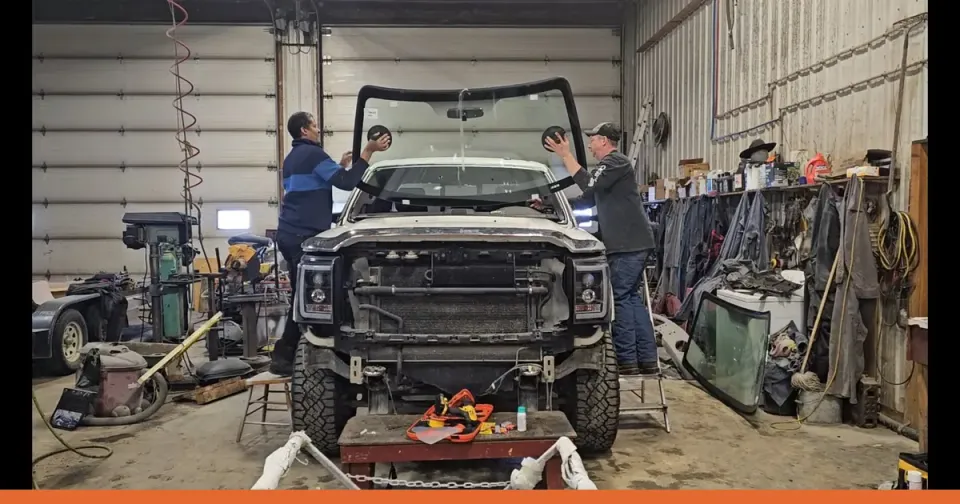
A farm equipment glass quote lives and dies on the details. Ask for "a tractor window" and the shop is left guessing which tractor, which window, and what is actually wrong with it. Send the machine, panel and location details up front and the same request can be identified, priced and scheduled without half a dozen back-and-forth messages.
The information needed for a farm equipment glass quote is: the exact machine, the exact damaged panel, clear photos, the condition of the opening and hardware, and the location where the work would be done. None of these are optional niceties. Each one narrows the job from "some glass on some machine somewhere" to a specific panel on a specific cab that can actually be sourced and installed.
This guide explains each piece of information, why it matters, and how to send it. It is written for farmers and equipment owners around Kamsack, Canora, Pelly and the Kelvington area. SEK Glass asks for these details when quoting farm equipment glass work, and its mobile glass service depends on the same information to assess whether a job can be done where the machine sits. This article explains how to provide a complete request; it does not set prices, delivery dates or guarantee that a particular panel is available.
Why vague requests get stuck
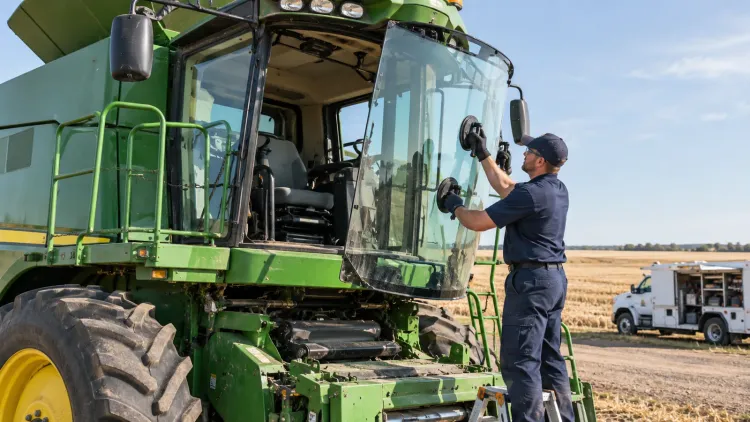
A cab is a collection of separate panes, not one piece of glass. A typical tractor or combine cab can have a front windshield, two door panes, fixed side windows, a rear window and small corner or quarter panes. Two machines that look alike from across the yard can use entirely different glass because of the model year, cab option, serial-number range or the hardware holding each pane in place.
When a request is vague, the shop has to work backward through every one of those variables. That means:
- asking which pane is damaged;
- asking which machine it is on;
- asking whether the door hinges on the left or right;
- asking for photos of the frame and seals;
- asking whether anything else is bent or broken; and
- asking where the machine actually sits.
Each unanswered question delays identification and adds a day to the quote. A complete first message can compress all of that into a single review.
The fix is to separate machine identification from panel identification from location and condition. Treat each one as its own task.
Machine identification: pin down the exact unit
The first block of information identifies which machine the glass belongs to. Collect as much of the following as you can find:
- Equipment type. Tractor, combine, sprayer, swather, loader or something else.
- Manufacturer. The make, not a nickname.
- Model. The full model designation, including suffixes if you know them.
- Year. If known. If not, say so rather than guessing.
- Serial number or VIN. Where the machine has one and it helps identify the cab.
- Cab model or option. Sometimes shown in the operator's manual, parts book or on a cab data plate.
The identification plate is the single most useful photo you can send. It usually sits on the frame, under the cab or near a step, and carries the model and serial information in one place. Photograph it clearly and straight on.
Do not guess at a model suffix or year. A confident but wrong number sends the search in the wrong direction and can produce a quote for the wrong part. If you are unsure, write "uncertain" and let the photo do the identifying.
Why the serial number matters
Two machines of the same make and model can still differ. A serial-number range often marks a change in cab design, glass shape, tint, mounting method or available hardware. That change is exactly the kind of detail that turns a correct panel into an almost-correct one.
Where the serial number is available, include it. Where it is not, say what you do know and send photos of the machine and cab.
Panel position: name the pane, not just the problem
The second block identifies which piece of glass is damaged. Describe the pane from the operator's position, because that is the reference point a parts diagram uses.
Say, for example:
- "front windshield, lower centre";
- "left-hand door glass, full pane";
- "right rear quarter glass, behind the door";
- "rear cab window, lower half".
For a door, note which side the hinges and latch are on. For a fixed pane, note whether it is beside, behind or in front of the operator. This small detail removes an entire category of guesswork.
Do not call every pane a windshield. A windshield, a door glass and a rear window are different parts with different shapes, curves, tints, holes and hardware. Calling a side door a "windshield" sends the search to the wrong panel entirely.
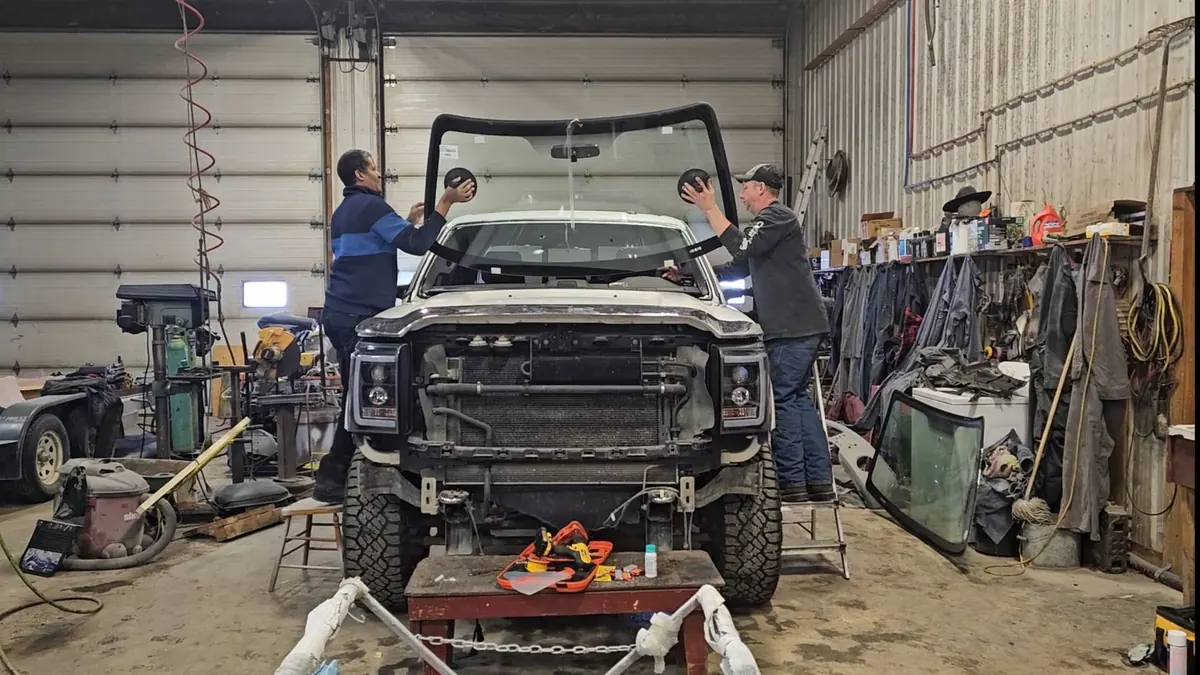
Photos: show the whole machine and the whole panel
Photos carry more useful information than a written description alone. Send a set, not a single shot. The most useful set covers:
- The whole machine. This shows the model, cab style and general layout.
- The whole cab. Straight on, from a few steps back, so the panel position is obvious.
- The damaged panel. Straight on, filling the frame.
- The damage up close. A clear close-up of the crack, chip or break.
- All four edges. Each edge of the panel, showing the seal and frame.
- The frame, seal and hardware. Hinges, latches, handles, wiper mounts, antenna or sensor locations.
- Any markings. Etched or printed numbers, logos or codes on the remaining glass.
For the markings, take one close-up that is in focus and a second wider shot showing where on the glass the marking appears. A number is only useful if you know which pane it belongs to.
Photos of the whole machine and cab are not filler. A close-up of a crack, on its own, tells the shop almost nothing about which glass it is on. The wide shots place the damage and the close-ups show its condition. Both are required.
Glass markings and part numbers: helpful, but do not guess
Some farm equipment glass carries an etched or printed number that corresponds to the part. When that number is readable, photograph it and include it. It can shorten identification significantly.
If there is no visible number, or you cannot read it, do not invent one. Sending a wrong part number is worse than sending none, because it sends the search down the wrong path before the error is caught.
Where a number is present, treat it as a starting point, not a guarantee. Glass can carry multiple markings, and some markings relate to the glass manufacturer rather than the equipment part number. Pair the number with the machine details and photos so it can be confirmed.
Frame, seals and hardware: report damage, not just broken glass
The glass is rarely the only thing that matters. The replacement has to fit the existing opening, and that opening is defined by its frame, seal and hardware.
When you send the request, mention anything else that looks wrong:
- a bent or cracked frame;
- a torn, hardened or missing seal;
- broken hinges, latches or handles;
- a door that no longer closes properly;
- rust or corrosion around the opening;
- trim that is loose, missing or cracked; and
- wiper, antenna or sensor components attached to or near the glass.
If a door was forced after the glass broke, say so. A pane that shattered because the door was wrenched open may have a damaged frame behind it, and that changes the job. A new pane cannot correct a bent opening or a failed latch by itself.
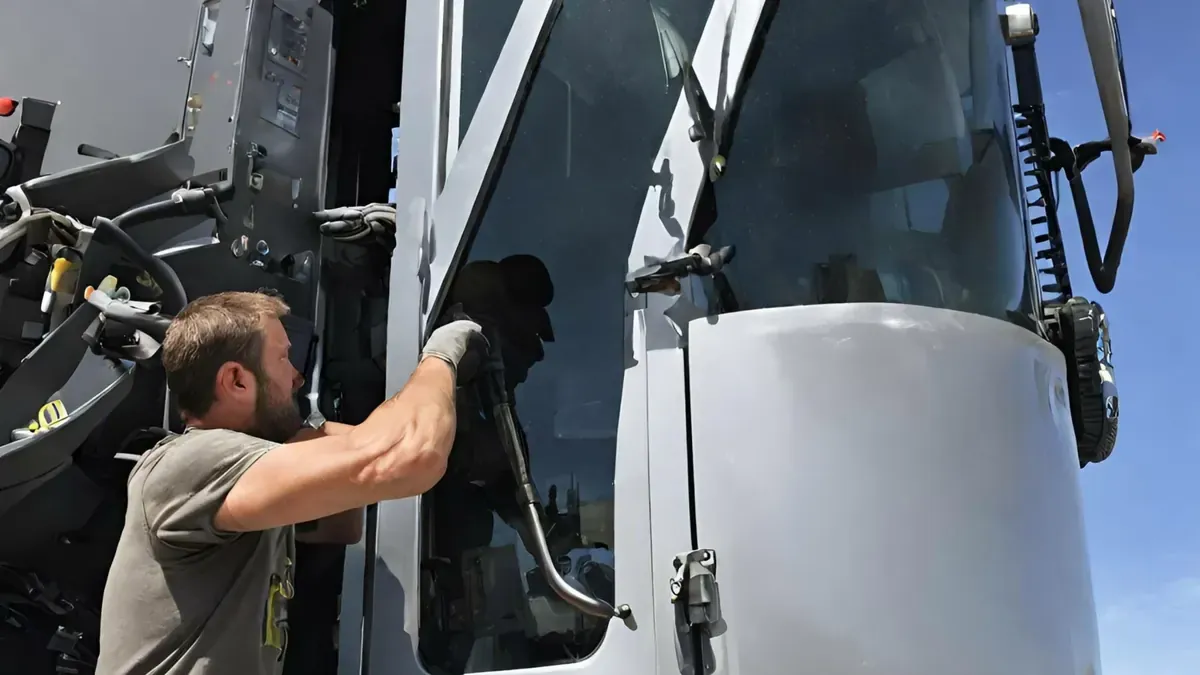
Measurements: supporting detail, not the main identifier
Approximate dimensions can help, especially when several similar panels are involved or the machine identification is uncertain. They are not a substitute for the correct part.
Shape, curvature, tint, holes, printed borders, edge treatment and cab variation can all matter even when two panes measure the same. Give dimensions as supporting context, and only if you already have them.
Do not remove intact trim, reusable hardware or the remaining glass just to take a measurement, unless the shop has asked you to do so. Removing glass early can discard markings, damage a reusable part or leave the cab exposed. Where immediate safety requires action, that is different, but routine measurement is not a reason to strip the cab.
Location: where would the work actually happen?
For mobile farm equipment glass service, the location is part of the quote. A job that can be done in a clean shop bay may not be practical in a muddy field, and a job in a sheltered yard may not work in a tight machine shed.
Include:
- the community and rural address or land location;
- directions that make sense to someone approaching from the road;
- whether the machine is indoors, under cover, in a yard or at the edge of a field;
- the type of ground where the work would happen;
- overhead lines, narrow gates, low doors or other access limits; and
- anything about the yard that would affect a service vehicle.
Firm, reasonably level ground with room beside the damaged panel is the ideal. Soft ground, a slope, deep snow, a congested lane or an attachment still raised all change whether on-site work is practical. Describe the site honestly so the shop can plan around it rather than discover a problem on arrival.
Timing context: useful, but not a promise
If the machine is needed for a particular operation, say so. "We need this combine for harvest in three weeks" tells the shop why the request is urgent and helps explain the timeline. It does not guarantee that the glass is available, that the weather will cooperate, or that an appointment will fit the schedule.
State the timing context plainly and let the shop confirm what is actually possible. Building a field plan around an assumed date, before the job has been quoted, is how schedules get broken.
What the quote request does and does not do
Submitting a complete request starts the assessment. It does not by itself book an appointment or authorize work. After the details are reviewed, the shop still needs to:
- confirm the correct glass and any related materials;
- check availability and lead time;
- assess whether mobile service is practical at the location; and
- discuss weather, scheduling and price.
Treat the quote request as the first step in a conversation, not the end of one. The SEK Glass quote page explains that a submitted request begins a discussion rather than committing to a service.
Put it together in one clear request
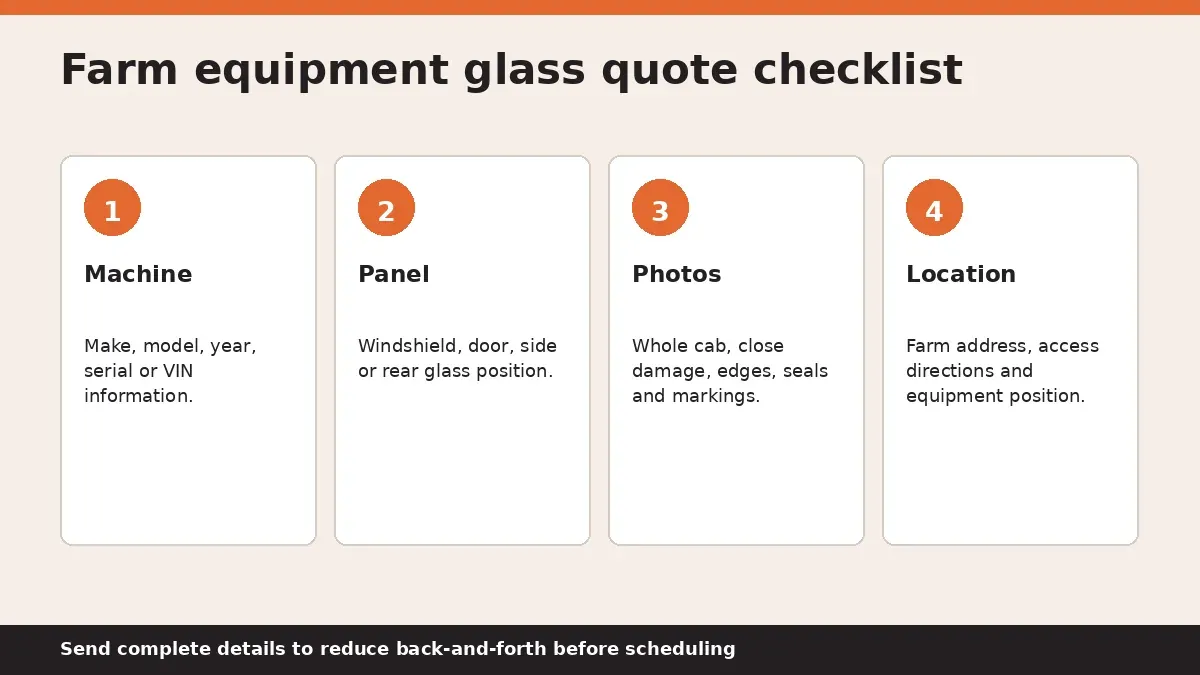
A complete request bundles everything above into a message the shop can review in one pass:
- Your contact details, including a phone number that is monitored during the day.
- Machine details. Type, make, model, year if known, and available serial or identification information.
- Panel position. Exactly which pane is damaged, described from the operator's position.
- Photos. Whole machine, whole cab, damaged pane, damage close-up, edges, frame, seal, hardware and markings.
- Condition of the opening. Missing glass, bent metal, rust, damaged trim, broken hinges or latch problems.
- Where it is parked. Indoors, under cover, in a yard or at the edge of a field.
- Access limits. Soft ground, narrow gates, low doors, animals, overhead lines or locked yards.
- Timing context. When the machine is needed, stated as context rather than a deadline demand.
Send all of it in the first message and the shop can start identifying the glass immediately.
What to avoid when requesting a quote
A few habits reliably slow down a farm equipment glass quote:
Sending only a close-up of the crack. It shows damage but not which pane or cab it is on. Pair it with wide shots.
Calling every pane a windshield. A windshield, door and rear window are different parts. Name the pane and its position.
Guessing at a model or part number. A wrong number sends the search in the wrong direction. Send a photo instead.
Removing the glass too early. The remaining pane and its markings help identification. Leave it unless safety or the shop requires otherwise.
Ignoring frame or hardware damage. A new pane cannot fix a bent opening or broken hinge. Report everything that looks wrong.
Treating the request as a booking. Submitting details starts the assessment. Availability, price and scheduling still need confirmation.
Common questions about farm equipment glass quotes
Do I need the part number to get a quote?
No, not to begin the request. Accurate machine details and detailed photos are enough to start identification. If a part number is visible, include it, but do not guess at one.
What if I do not know the model year?
Say so and send photos of the identification plate and the whole machine. The serial number and photos can often identify the cab even when the year is uncertain.
Can I get a price without sending photos?
Usually not an accurate one. The correct panel has to be identified before it can be priced, and identification depends on the machine, panel and photos. A price quoted blind would likely be revised once the real part is confirmed.
Does SEK Glass need a farm address or just a town?
The exact location, not just a town. A community name does not tell the shop where the service vehicle needs to go, what the access is like, or whether the machine is indoors or out. Provide the rural address or land location and directions.
Can the shop tell me the part from a photo alone?
Often, yes, especially with the machine details and a clear set of photos. A single close-up of the damage is not enough, but a wide cab photo, panel position and close views of the edges and markings usually get identification moving.
Will a measurement speed up the quote?
It can help as supporting detail, but it is not the main identifier. Shape, curve, tint, holes and edge treatment can matter even when dimensions match. Send dimensions if you have them, but rely on the machine details and photos.
Local glass quote information for Canora, Pelly and the Kelvington area
The same information applies across the SEK Glass service area. The local pages explain what to send for specific communities:
- The Canora farm equipment glass page asks for machine and panel details, photos, farm location and access directions, and notes that availability depends on the glass, machine, access, weather and schedule.
- The Pelly farm equipment glass page explains how full-cab and close-up photos, glass markings and details about seals, latches, trim or frame damage help identify the work.
- The Kelvington-area farm equipment glass page covers requests for windshields, door glass, side panels and rear cab glass, and stresses confirming the exact location and access.
None of these pages set a fixed travel boundary or promise automatic availability. Machines, farms, roads and panels vary. Send the exact location and job details for confirmation.
The practical next step
A good farm equipment glass quote starts before the message is even sent. Identify the machine, name the exact pane, take a useful set of photos and describe the location honestly. Leave the opening and hardware intact unless safety or specific instructions require otherwise.
Then send the request and treat it as the start of the conversation. Review the farm equipment glass service, then request a quote with your machine details, photos and farm location. SEK Glass accepts farm equipment glass enquiries from Kamsack, Canora, Pelly and the Kelvington area, with availability and the final work arrangement confirmed for the specific panel and site.
Sources
- SEK Glass: Farm Equipment Glass
- SEK Glass: Mobile Glass Service
- SEK Glass: Get a Quote
- SEK Glass: Farm Equipment Glass Replacement in Canora
- SEK Glass: Farm Equipment Glass Replacement in Pelly
- SEK Glass: Farm Equipment Glass Replacement in the Kelvington Area
- Canadian Centre for Occupational Health and Safety: Tractors, Operation
- Canadian Centre for Occupational Health and Safety: Tractors, Maintenance
Member discussion